A basin can arrive in perfect condition and still stop an installation if the waste fitting does not match. Product teams often discuss shape and finish first, while the drain is left as a site decision. Buyers can prevent most interface problems by confirming a few unglamorous details early.
Identify the exact waste fitting
Record the selected fitting, nominal size, flange diameter, thread, body depth, and sealing method. A phrase such as standard drain is not precise enough across markets.
If the buyer will source the fitting locally, provide its technical sheet or a physical sample before final approval.
Match overflow and non-overflow designs
A basin with an overflow requires a compatible waste path. A fitting intended for a basin without overflow may block or bypass that function.
Confirm whether the model includes an overflow, where the channel runs, and how the fitting connects. Show it on the drawing and sample checklist.
Check the sealing surface
Review the area around the drain opening for flatness, thickness, and access for gaskets or sealant. Decorative flanges must cover the opening without interfering with the bowl radius.
Ask the installer which sealing products are approved locally and suitable for the selected components. Follow the fitting and sealant manufacturers' instructions.
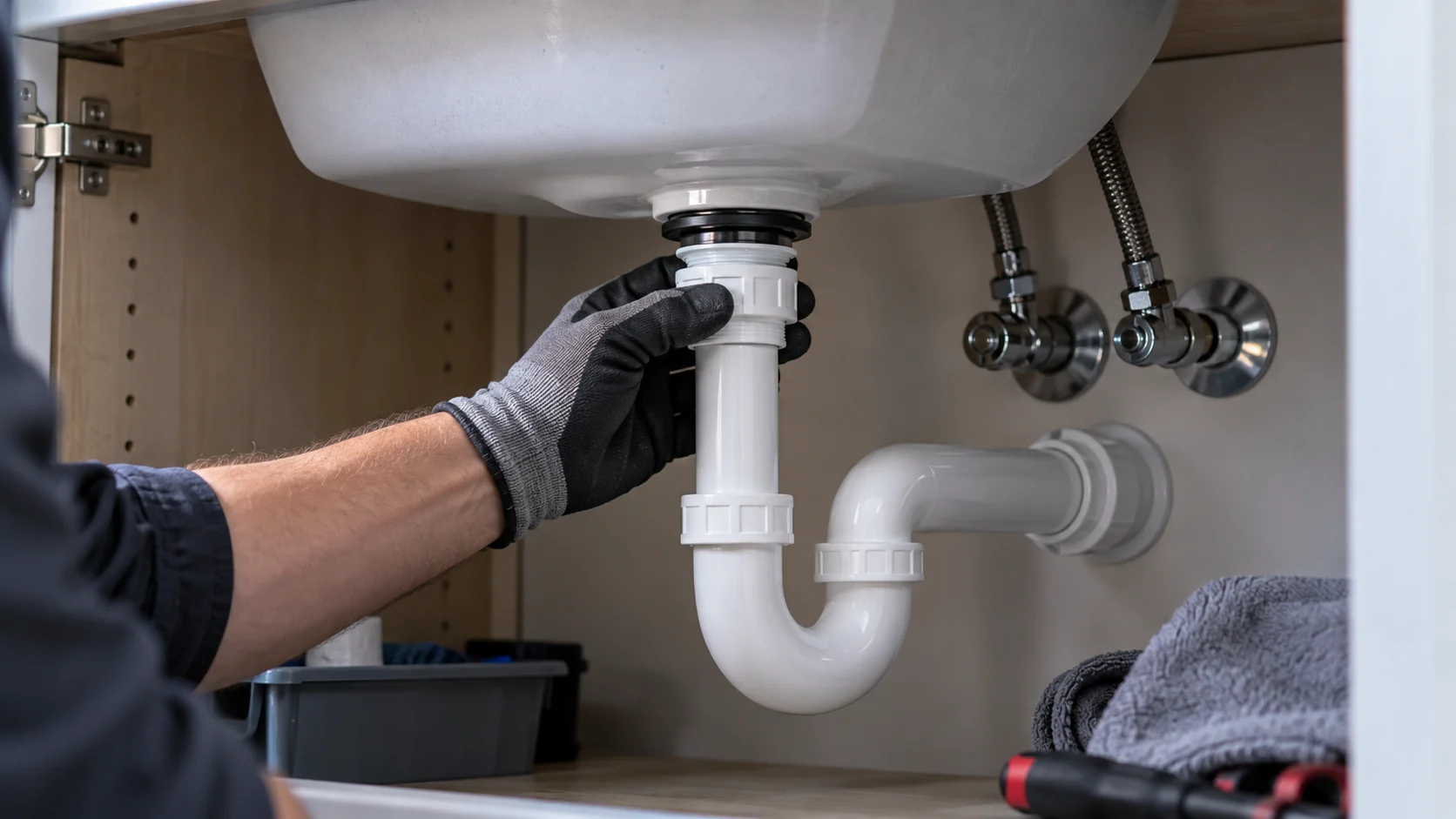
Reserve space for the trap
Measure from the underside of the bowl to shelves, drawers, cabinet base, and wall outlet. Include the full assembled fitting, not only the visible flange.
Where space is tight, make a simple full-size cardboard section or install the actual waste set in the sample cabinet.
Separate supply scope from compatibility
Clarify whether the basin price includes the waste fitting. If it does, request its specification. If it does not, assign responsibility for checking the locally purchased part.
Compatibility should be confirmed even when components come from different vendors. A scope gap is not a technical solution.
Test before the main installation
During sample approval, assemble the drain and trap, fill the bowl, operate the overflow where provided, and inspect for movement or leaks. Record the accepted parts.
Use technical support to align basin drawings with the project's selected plumbing hardware before production.
For a compatibility check, send the basin model, drain fitting data, overflow requirement, cabinet section, trap layout, local standard, and order quantity.