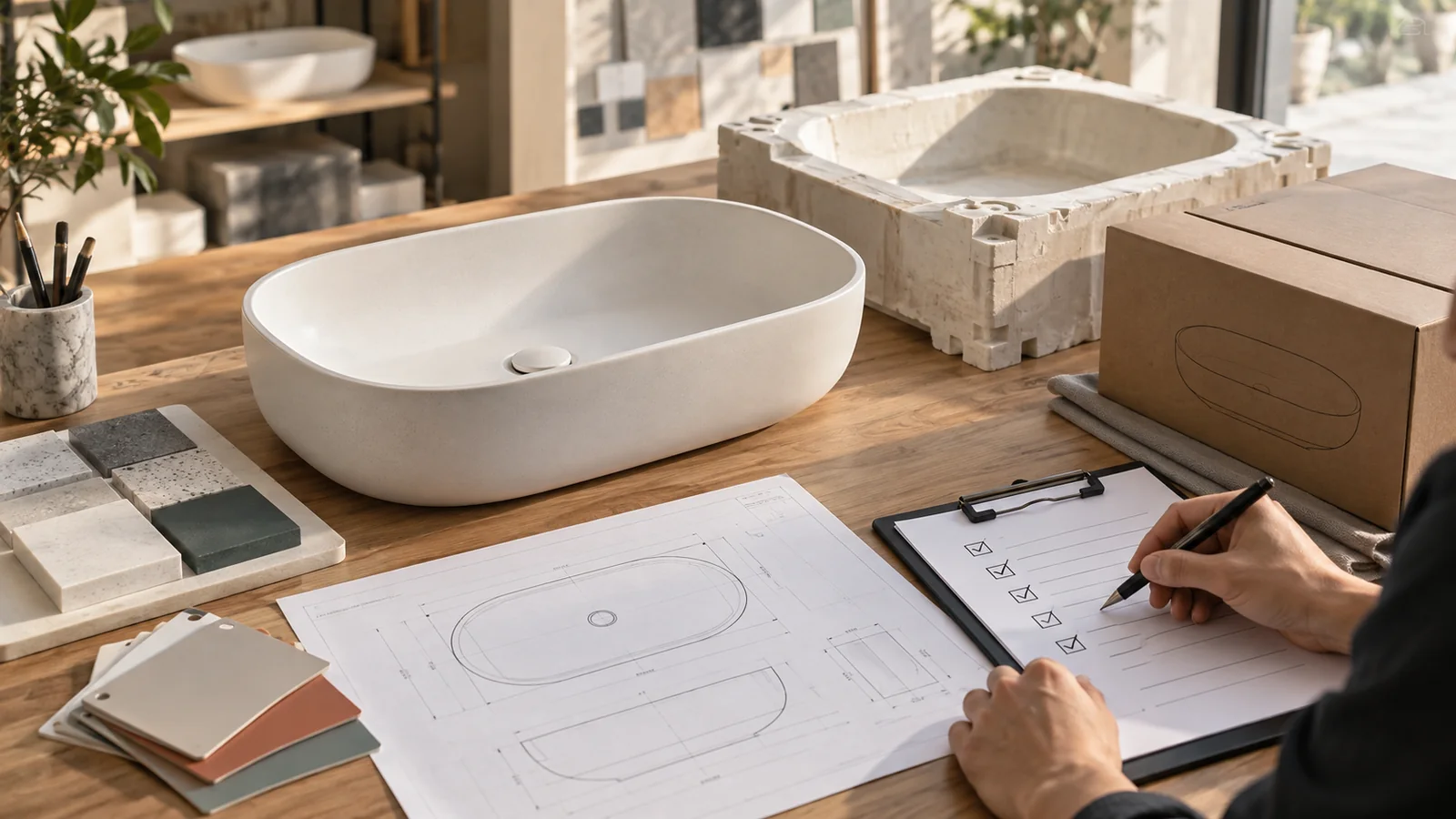
OEM solid surface wash basin orders need more discipline than standard model purchasing. Once a buyer adds custom size, private label packaging, special hole positions, or project-specific documents, every detail should be confirmed before production.
Use the following points as a working checklist rather than a broad product introduction. The details are written for B2B buyers who need to coordinate quotations, samples, project documents, and repeat orders with fewer surprises.
Confirm the base model and technical drawing
Start with the model or reference shape, then confirm length, width, height, bowl size, drain position, faucet hole, overflow, and edge details. A photo is not enough for production discussion. For buyers adapting an existing model, compare the drawing with QINGDA solid surface wash basin models and identify every requested change.
For a purchasing team, this point should be recorded in a shared specification file rather than left in a chat message. Include the model number, drawing version, requested finish, quantity, packing note, and the person who approved the detail. That record helps the cabinet factory, project contractor, distributor, and supplier work from the same information when the order moves from quotation to sample and then to bulk production.
During sample review, check the physical product against the drawing and the quotation line by line. Measure the main dimensions, inspect the surface finish under normal light, test the drain and faucet hole positions against the cabinet plan, and take clear photos for the order file. A sample should not be approved only because the general appearance looks acceptable.
Separate material requests from design requests
Acrylic Solid Surface is the standard material. If the buyer needs Corian material, this should be stated as a custom project request and reviewed before quotation. Do not combine design approval and material approval into one vague sentence. For material-specific inquiries, use Corian Material Option and provide quantity, finish, color expectation, and target schedule.
Buyers should also ask what information is still missing before the supplier can quote accurately. Missing details often include faucet type, overflow requirement, cabinet drawing, carton mark, delivery window, or the exact material wording needed for the project file. Clarifying these items early makes the quotation more useful and reduces the chance of rework after sample approval.
For bulk orders, the same detail should be repeated consistently. Ask how the supplier will separate models, mark cartons, protect corners, report inspection results, and communicate shipment readiness. This is especially important when one purchase order includes several sizes or when the products will be installed in different floors, buildings, or room types.
Discuss finish, color, and sample approval
OEM orders should not move to bulk production until the sample or approved reference is clear. Confirm whether the finish is matte, satin, or another agreed surface, and record any acceptable tolerance for color or texture. Sample photos help, but physical sample approval is often better for long-term programs.
During sample review, check the physical product against the drawing and the quotation line by line. Measure the main dimensions, inspect the surface finish under normal light, test the drain and faucet hole positions against the cabinet plan, and take clear photos for the order file. A sample should not be approved only because the general appearance looks acceptable.
If the buyer is comparing several suppliers, use the same checklist for each one. A supplier who gives a lower unit price but cannot confirm drawings, packing, inspection, or material wording may create extra cost later. A practical comparison should include sample cost, expected lead time, packing method, communication quality, and how clearly the supplier handles changes before production.
Packaging and branding need their own checklist
Private label orders may require logo placement, carton marks, product labels, installation notes, and instruction sheets. Confirm who provides artwork, whether barcodes are needed, and how mixed models should be marked. If the basin is supplied to distributors, packaging consistency can affect warehouse picking and customer service.
For bulk orders, the same detail should be repeated consistently. Ask how the supplier will separate models, mark cartons, protect corners, report inspection results, and communicate shipment readiness. This is especially important when one purchase order includes several sizes or when the products will be installed in different floors, buildings, or room types.
Keep the material statement consistent through the whole process. Acrylic Solid Surface is the standard material for QINGDA catalog basins. Corian material available upon request should be used only when the buyer has specifically asked for that option and the selected project has been reviewed. This avoids incorrect catalog claims and keeps quotations clear for downstream buyers.
MOQ, lead time, and changes after approval
MOQ and lead time depend on model structure, customization level, material request, and order quantity. Buyers should also ask how changes are handled after sample approval. Late changes to faucet holes, overflow, or carton labels can delay production more than expected. For repeat programs, keep one approved specification file per model.
If the buyer is comparing several suppliers, use the same checklist for each one. A supplier who gives a lower unit price but cannot confirm drawings, packing, inspection, or material wording may create extra cost later. A practical comparison should include sample cost, expected lead time, packing method, communication quality, and how clearly the supplier handles changes before production.
For a purchasing team, this point should be recorded in a shared specification file rather than left in a chat message. Include the model number, drawing version, requested finish, quantity, packing note, and the person who approved the detail. That record helps the cabinet factory, project contractor, distributor, and supplier work from the same information when the order moves from quotation to sample and then to bulk production.
Use a practical OEM communication flow
A good flow is inquiry, drawing review, quotation, sample, sample approval, bulk order, inspection, packing, and shipment. The OEM and ODM support page gives a broader view of OEM cooperation, while Quality Assurance support can support inspection planning. When the details are ready, contact QINGDA with model files and target launch date.
Keep the material statement consistent through the whole process. Acrylic Solid Surface is the standard material for QINGDA catalog basins. Corian material available upon request should be used only when the buyer has specifically asked for that option and the selected project has been reviewed. This avoids incorrect catalog claims and keeps quotations clear for downstream buyers.
Buyers should also ask what information is still missing before the supplier can quote accurately. Missing details often include faucet type, overflow requirement, cabinet drawing, carton mark, delivery window, or the exact material wording needed for the project file. Clarifying these items early makes the quotation more useful and reduces the chance of rework after sample approval.
Final review before sending the inquiry
Before contacting a supplier, prepare a compact inquiry package: selected model or drawing, target size, quantity, application, finish, faucet hole and overflow requirements, packing request, delivery schedule, and any material specification. This gives QINGDA enough information to respond with practical comments instead of a generic reply.
The final check is simple: the product should match the cabinet or project layout, the material wording should be accurate, the packing should fit the delivery plan, and the buyer should know what must be approved before production starts. When these points are clear, a solid surface wash basin order is easier to quote, sample, inspect, and repeat.