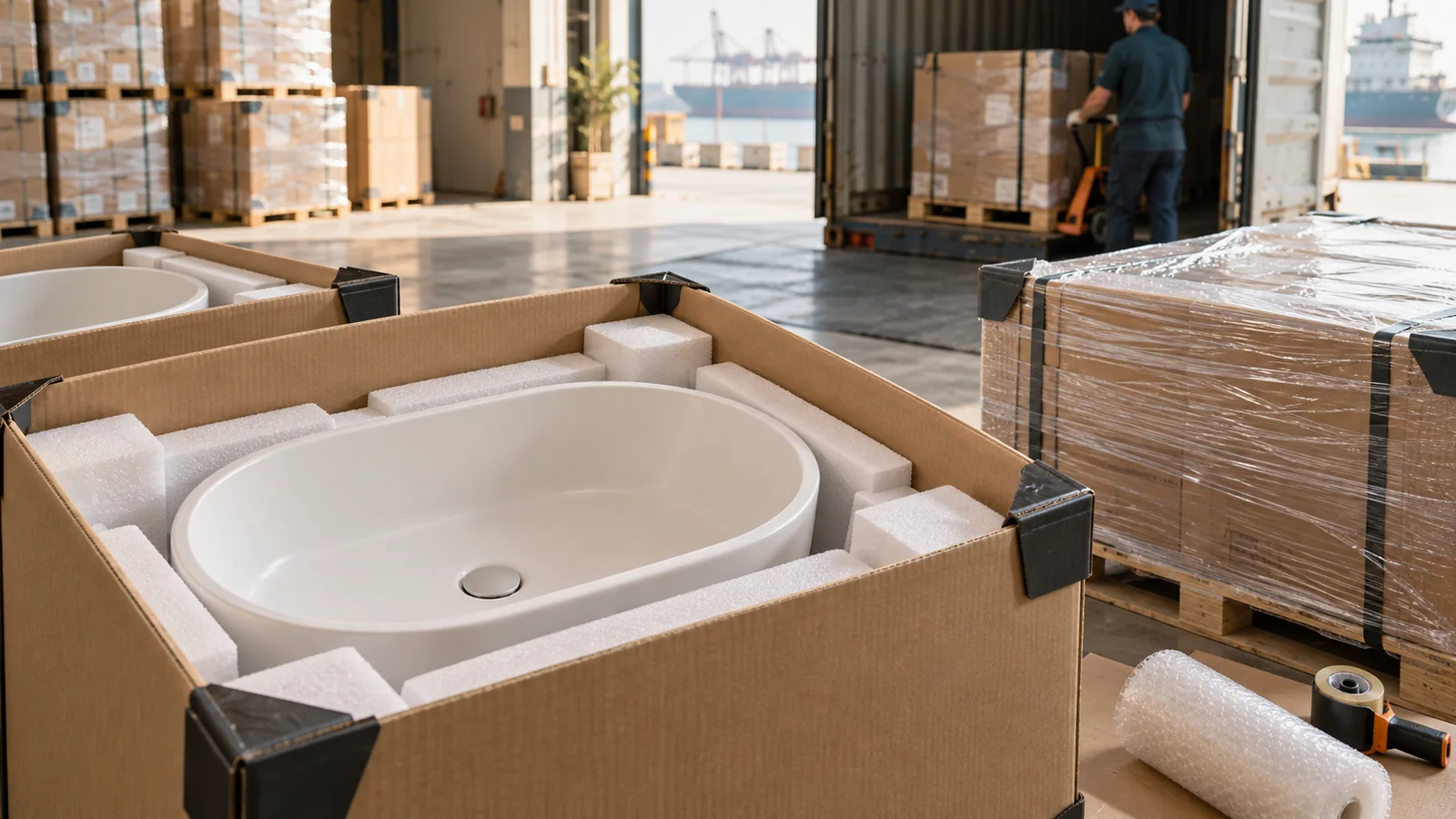
Shipping damage is not only a logistics problem. For solid surface basin buyers, damage risk is shaped by product design, carton structure, foam protection, pallet planning, model labels, inspection photos, and how clearly the order is packed before it leaves the factory.
Start damage prevention during product selection
Long vanity tops, thin edges, sharp corners, and heavy integrated pieces usually need more careful packing than compact countertop basins. If the order includes several product types, do not assume one packing method is suitable for all of them.
When comparing QINGDA solid surface basin models, ask how each model is normally packed and whether the order needs extra protection for ocean shipment, mixed containers, or long storage before installation.
Define the carton and foam plan
A useful packing plan should describe carton strength, foam position, corner protection, bottom support, product orientation, and whether the basin can move inside the carton. The goal is not to make the carton look heavy; the goal is to protect the weak points of the actual product.
For integrated vanity tops, pay special attention to long edges and corners. For countertop basins, check rim protection, bottom support, and whether the drain area is protected from pressure.
Use carton marks that installers can understand
Damage risk increases when cartons are opened, moved, or stacked incorrectly on site. Clear carton marks help warehouse and installation teams identify model number, color, size, quantity, and handling direction. If a hotel project has room types, add a label system before shipment.
For project shipments, use Project Supply support to organize model separation, batch shipping, carton marks, and loading photos. This can reduce confusion when the goods arrive at a busy site.
Ask for inspection photos before loading
Pre-shipment photos should show product surface, carton condition, labels, pallet or loading arrangement, and model counts. Photos do not replace inspection, but they help the buyer catch obvious mistakes before the container is closed.
Inspection should include visible surface, dimensions, drain, faucet hole, overflow if required, packing, and carton condition. Quality Assurance support can help buyers define the inspection points before production is finished.
Match packing with shipping method
Courier, LCL, full container, and project-site delivery create different risks. LCL cargo may be handled more often. Full container shipments still need strong loading control. A basin that is safe in a factory carton may not be safe after multiple transfers if the packing plan is too light.
If the buyer will re-export or distribute the basins after arrival, explain that at the beginning. Secondary handling may require stronger cartons or clearer labels than a direct project shipment.
Keep records for claim prevention
When damage happens, the buyer needs order records, packing photos, loading photos, carton labels, and arrival photos. These records help identify whether the issue came from packing, loading, transit, or site handling.
Before confirming an overseas order, contact QINGDA with model list, quantity, destination, shipping method, packing requirements, and any site labeling needs.
Discuss warehouse handling after arrival
Many damage cases happen after the goods arrive, not only during ocean freight. The buyer should tell the supplier whether cartons will go directly to a site, sit in a warehouse, be re-exported, or be distributed to several dealers. Each path creates different handling risk.
If cartons will be opened for inspection after arrival, plan how they will be repacked. A carton that was safe when shipped can become unsafe if foam pieces are removed or the product is returned to the carton in the wrong direction.
Use arrival feedback to improve the next shipment
After the first shipment, record carton condition, breakage points, label clarity, unloading comments, and installer feedback. Even if there is no major damage, small notes can improve the next order.
Share useful arrival photos with the supplier. If a corner needs more protection or a carton mark is hard to read, it is easier to adjust the packing before the next batch than to argue after repeated damage.
Need export packing support for solid surface basins? Contact QINGDA with model list, quantity, destination, shipping method, and packing requirements.