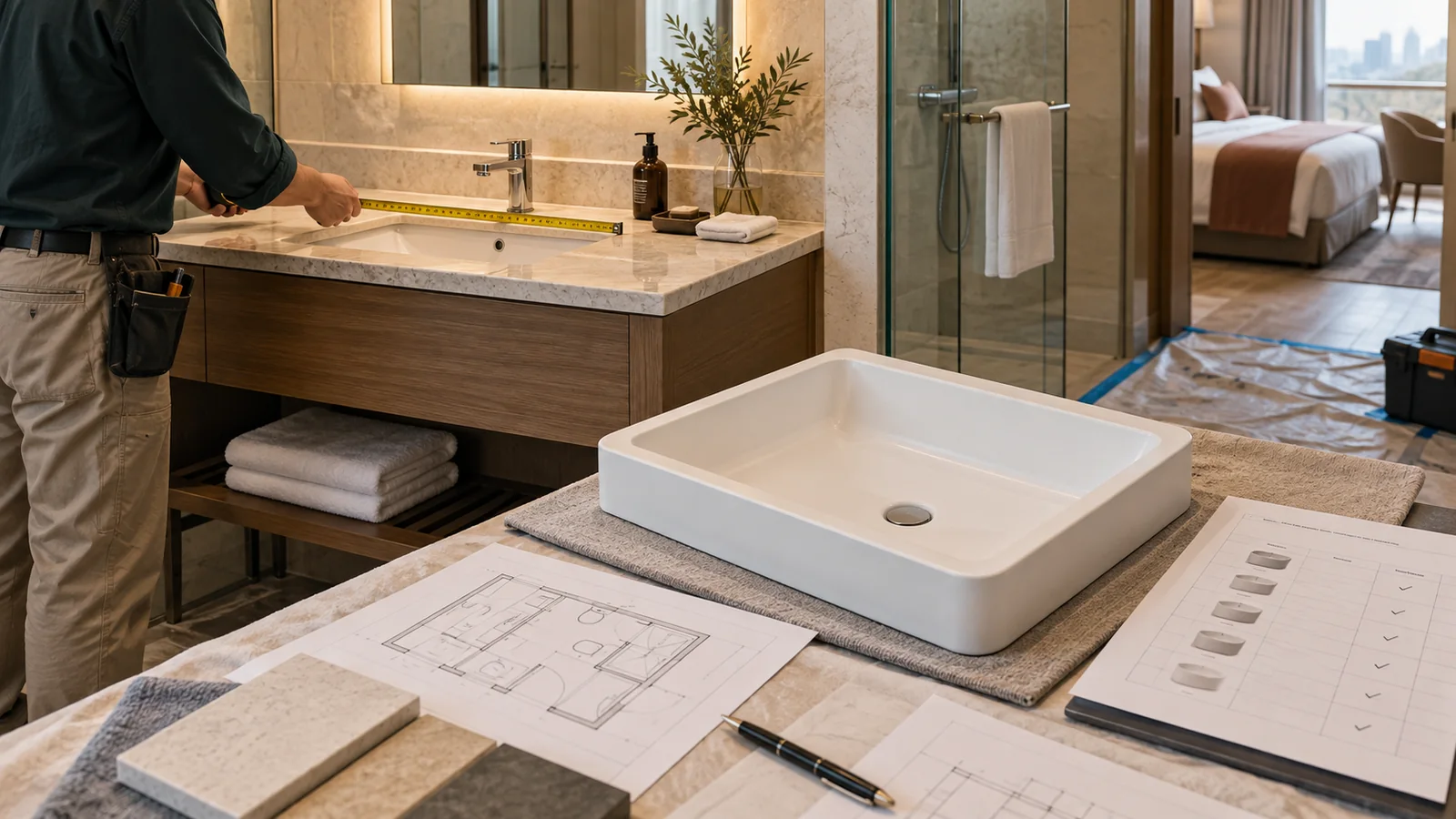
Replacement planning should start before basins fail, especially for hotels and apartments with many repeated bathrooms. A single damaged basin is inconvenient. A group of bathrooms with inconsistent replacement models can become a long-term maintenance problem.
For project buyers, the goal is to keep model consistency, installation compatibility, spare quantity, and supplier records under control. Replacement work is different from a new build because the buyer must respect existing cabinets, plumbing, wall finishes, and maintenance schedules.
Measure the existing bathroom first
Before selecting a replacement basin, measure the current cabinet, countertop opening, wall clearance, drain position, faucet position, and available plumbing space. Do not rely only on the old purchase name. The actual installation may have been adjusted during the original project.
If the old basin is installed in a vanity cabinet, check cabinet depth, drawer clearance, support rails, and whether the countertop has a fixed cutout. Matching a new basin to an old opening is often more restrictive than selecting a model for a new project.
Compare the old model with current options
If the original model number and drawing are available, compare them with current solid surface basin models. Check outside size, bowl position, drain center, faucet hole, overflow, installation type, color, and finish. If the exact model is still available, replacement is simpler. If not, the buyer may need a close model or a custom size review.
For apartments, repeated bathroom layouts may allow one replacement model across many units. For hotels, different room types may require several basin sizes. Keep a room-type list so maintenance teams do not order the wrong basin for a suite, standard room, or accessible bathroom.
Review installation compatibility
Replacement installation should be checked with the contractor before the order is confirmed. A countertop basin may be simple to remove and replace, while an undermount or integrated vanity top may require more work. Sealant, adhesive, wall conditions, and countertop damage can affect the method.
If the replacement requires a custom size, use custom size support and share photos of the existing installation. Include top view, underside view, drain area, faucet area, wall edge, and cabinet interior. These photos help the supplier understand real site limits.
Plan spare units with the maintenance team
Hotels and apartments should consider spare units, especially when the basin model is custom or when the project uses a special color or finish. Spare planning reduces downtime when a unit is damaged. The right quantity depends on project size, usage intensity, storage space, and future reorder lead time.
Spare units should be stored with clear labels and packing protection. Keep model number, color, finish, and drawing version visible. If spare units are removed from cartons for inspection, repack them properly so they are still protected when needed later.
Batch color consistency
Color and finish consistency can be difficult if replacement orders are made years after the original installation. The buyer should keep approved sample records and original order details. When reordering, compare new samples or photos with the existing installed basin under similar lighting.
For visible areas such as hotel guest rooms, replacement consistency matters more than in back-of-house areas. If a perfect match is not possible, discuss whether replacement should be limited to one bathroom, one floor, or a full room group.
Keep drawings and order records
A replacement file should include model number, drawing, sample approval photos, finish note, material statement, packing method, supplier contact, original order date, and installation comments. This file should be available to purchasing and maintenance teams, not only the original project manager.
The project supply support page is relevant because replacement planning is part of long-term project supply. The first order should already consider future replacements, spare units, and reorder communication.
Work with a supplier who understands repeat orders
For hotels and apartments, the supplier relationship does not end when the first shipment arrives. Buyers may need replacement units, new room batches, renovation support, or a revised model for future phases. A clear supplier record makes these requests faster and less risky.
Solid Surface is the standard material for QINGDA catalog basins. If a replacement project requests Corian material for selected custom units, that requirement should be reviewed separately and written into the quotation, sample approval, and order record.
Prepare the replacement inquiry
A useful replacement inquiry includes old model number if available, photos, current dimensions, cabinet drawings, installation type, quantity, spare quantity, color, finish, faucet and overflow details, and delivery schedule. If damage is the reason for replacement, include photos of the damaged unit and the surrounding installation.
If your hotel or apartment project needs solid surface basin replacement planning, contact QINGDA with existing bathroom photos, dimensions, model records, and target replacement quantity.
Replacement planning should also include timing. Hotels may need work done between guest bookings, while apartments may need coordination with tenants or property managers. Ask the supplier about production lead time, packing, and shipping before the maintenance team schedules removal of old basins. A replacement unit that arrives late can leave a room or apartment unusable longer than planned.
For phased renovations, do not assume every building has the same original installation. Measure a sample group from each phase or building before placing a large order. Older apartments may have cabinet changes, tile repairs, or plumbing adjustments that are not visible in the original project documents.
Replacement planning should also include timing. Hotels may need work done between guest bookings, while apartments may need coordination with tenants or property managers. Ask the supplier about production lead time, packing, and shipping before the maintenance team schedules removal of old basins. A replacement unit that arrives late can leave a room or apartment unusable longer than planned.
For phased renovations, do not assume every building has the same original installation. Measure a sample group from each phase or building before placing a large order. Older apartments may have cabinet changes, tile repairs, or plumbing adjustments that are not visible in the original project documents.