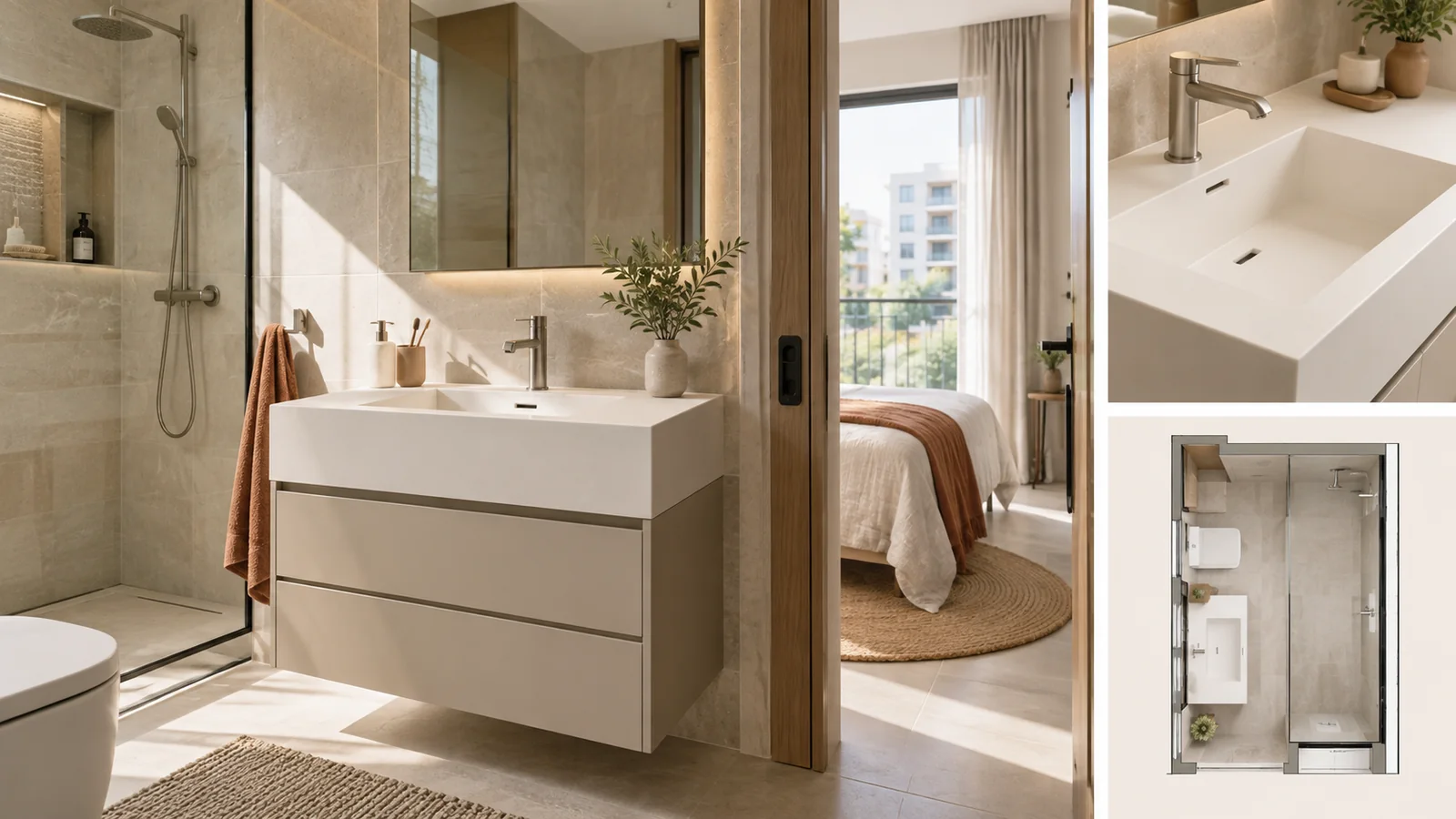
Apartment bathroom projects need a balance of appearance, cost control, maintenance, and repeatable supply. Solid surface wash basins are often considered because they can support clean cabinet lines and consistent bathroom styling across many units.
Use the following points as a working checklist rather than a broad product introduction. The details are written for B2B buyers who need to coordinate quotations, samples, project documents, and repeat orders with fewer surprises.
Developers need stable cost and stable details
For apartment projects, a basin must match the bathroom layout and remain consistent across many units. Buyers should confirm model number, size, bowl location, faucet hole, overflow, and packing before comparing prices. A lower quote is not useful if replacement pieces later differ from the approved model.
For a purchasing team, this point should be recorded in a shared specification file rather than left in a chat message. Include the model number, drawing version, requested finish, quantity, packing note, and the person who approved the detail. That record helps the cabinet factory, project contractor, distributor, and supplier work from the same information when the order moves from quotation to sample and then to bulk production.
During sample review, check the physical product against the drawing and the quotation line by line. Measure the main dimensions, inspect the surface finish under normal light, test the drain and faucet hole positions against the cabinet plan, and take clear photos for the order file. A sample should not be approved only because the general appearance looks acceptable.
A clean look for repeated bathroom layouts
Many apartment bathrooms use compact vanities or integrated basin designs. Solid surface basins help keep the design simple and modern without creating difficult cleaning corners. Buyers can review QINGDA solid surface wash basin models to identify models that fit common cabinet widths before requesting samples.
Buyers should also ask what information is still missing before the supplier can quote accurately. Missing details often include faucet type, overflow requirement, cabinet drawing, carton mark, delivery window, or the exact material wording needed for the project file. Clarifying these items early makes the quotation more useful and reduces the chance of rework after sample approval.
For bulk orders, the same detail should be repeated consistently. Ask how the supplier will separate models, mark cartons, protect corners, report inspection results, and communicate shipment readiness. This is especially important when one purchase order includes several sizes or when the products will be installed in different floors, buildings, or room types.
Size flexibility for different unit types
Projects may include studio units, family units, and accessible layouts. The same general design may need several sizes. For these cases, custom length, bowl position, and faucet hole options should be discussed early through Custom Sizes service, especially when the cabinet supplier is already selected.
During sample review, check the physical product against the drawing and the quotation line by line. Measure the main dimensions, inspect the surface finish under normal light, test the drain and faucet hole positions against the cabinet plan, and take clear photos for the order file. A sample should not be approved only because the general appearance looks acceptable.
If the buyer is comparing several suppliers, use the same checklist for each one. A supplier who gives a lower unit price but cannot confirm drawings, packing, inspection, or material wording may create extra cost later. A practical comparison should include sample cost, expected lead time, packing method, communication quality, and how clearly the supplier handles changes before production.
Cleaning and maintenance after handover
Apartment operators and property managers prefer basins that can be cleaned with simple daily methods. Provide maintenance instructions that avoid harsh chemicals and abrasive tools. The Care and Maintenance guide page is a practical reference for buyer files and handover documents.
For bulk orders, the same detail should be repeated consistently. Ask how the supplier will separate models, mark cartons, protect corners, report inspection results, and communicate shipment readiness. This is especially important when one purchase order includes several sizes or when the products will be installed in different floors, buildings, or room types.
Keep the material statement consistent through the whole process. Acrylic Solid Surface is the standard material for QINGDA catalog basins. Corian material available upon request should be used only when the buyer has specifically asked for that option and the selected project has been reviewed. This avoids incorrect catalog claims and keeps quotations clear for downstream buyers.
Replacement planning is part of project supply
Developers should ask how replacement basins can be ordered later and whether model records will remain clear. Keep the approved drawing, photo, material statement, and finish note in the project file. The Project Supply support page can help buyers structure quantity planning and delivery timing.
If the buyer is comparing several suppliers, use the same checklist for each one. A supplier who gives a lower unit price but cannot confirm drawings, packing, inspection, or material wording may create extra cost later. A practical comparison should include sample cost, expected lead time, packing method, communication quality, and how clearly the supplier handles changes before production.
For a purchasing team, this point should be recorded in a shared specification file rather than left in a chat message. Include the model number, drawing version, requested finish, quantity, packing note, and the person who approved the detail. That record helps the cabinet factory, project contractor, distributor, and supplier work from the same information when the order moves from quotation to sample and then to bulk production.
How QINGDA reviews apartment project inquiries
Useful inquiry details include unit quantity, room type split, cabinet dimensions, required basin size, target delivery date, and material requests. Acrylic Solid Surface is the standard material, and Corian material available upon request can be reviewed only when specifically required. Buyers can contact QINGDA with drawings and schedules for a focused reply.
Keep the material statement consistent through the whole process. Acrylic Solid Surface is the standard material for QINGDA catalog basins. Corian material available upon request should be used only when the buyer has specifically asked for that option and the selected project has been reviewed. This avoids incorrect catalog claims and keeps quotations clear for downstream buyers.
Buyers should also ask what information is still missing before the supplier can quote accurately. Missing details often include faucet type, overflow requirement, cabinet drawing, carton mark, delivery window, or the exact material wording needed for the project file. Clarifying these items early makes the quotation more useful and reduces the chance of rework after sample approval.
Final review before sending the inquiry
Before contacting a supplier, prepare a compact inquiry package: selected model or drawing, target size, quantity, application, finish, faucet hole and overflow requirements, packing request, delivery schedule, and any material specification. This gives QINGDA enough information to respond with practical comments instead of a generic reply.
The final check is simple: the product should match the cabinet or project layout, the material wording should be accurate, the packing should fit the delivery plan, and the buyer should know what must be approved before production starts. When these points are clear, a solid surface wash basin order is easier to quote, sample, inspect, and repeat.