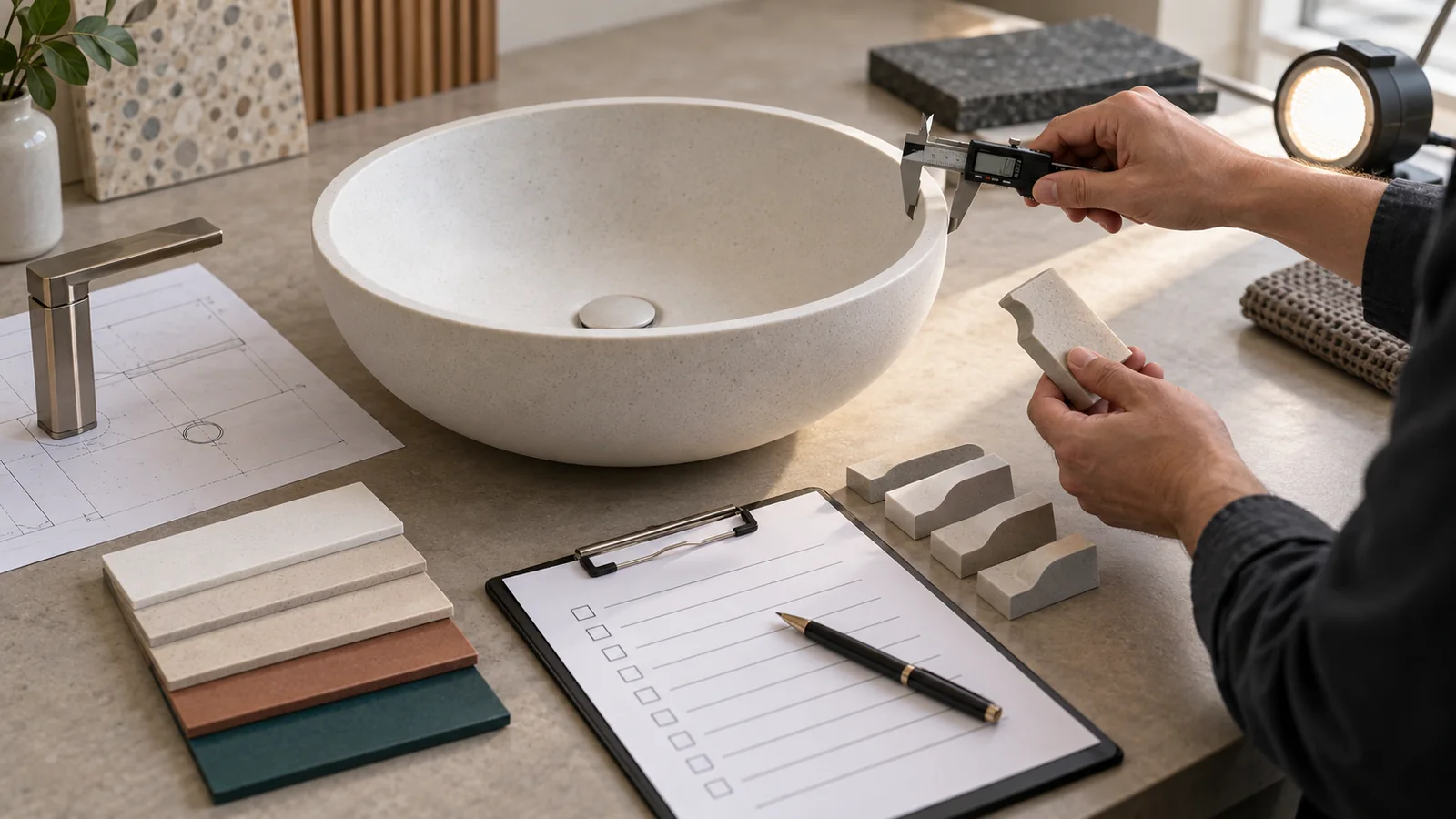
A sample is the control point between design discussion and mass production for custom solid surface basin projects. If the sample is approved loosely, the bulk order will carry the same loose assumptions. For bathroom cabinet factories, distributors, hotel projects, and private-label programs, sample approval should be a written purchasing step.
The goal is not to make the process heavy. The goal is to make the approved details visible: size, finish, color, drain, overflow, faucet hole, packing, and documents. Once these points are signed off, the supplier has a clearer production reference and the buyer has a stronger inspection record.
Define what the sample must prove
Before making a custom sample, write down its purpose. Is it confirming a new size, a new bowl position, a finish, a color, a faucet layout, or a complete OEM program? If the buyer wants a new product for a distributor catalog, the sample must also support photography, carton planning, and future repeat orders.
For custom size work, the custom sizes page gives a practical starting point. The sample request should include target dimensions, application, cabinet drawing if available, quantity estimate, and any material or finish requirement.
Measure the outside size and bowl size
Measure the sample with the approved drawing beside it. Check outside length, width, height, bowl length, bowl width, bowl depth, rim width, rear ledge, and any side ledge. For asymmetric basins, mark left or right bowl direction clearly. Photos should show the tape measure and the reference point.
Cabinet matching should not be guessed. Place the sample on or near the cabinet if possible, or compare it with the cabinet engineering drawing. Check drawer clearance, support rails, plumbing space, wall clearance, and countertop depth. A sample that cannot fit the cabinet should not move to mass production.
Check drain, faucet hole, and overflow
Drain location should be checked from the same reference points used in the drawing. Confirm diameter, center position, slope around the drain, and whether the selected drain hardware is compatible. If the project has existing plumbing, compare the drain center with the site or cabinet plan.
Faucet holes need the same attention. Confirm hole diameter, number of holes, distance from the rear edge, distance from the bowl, and whether the faucet spout reaches the correct area. Overflow should be confirmed as included, omitted, or pending. If the order may need technical review, involve QINGDA technical support before the buyer signs off.
Review finish, color, and surface feel
Finish and color should be checked under realistic lighting, not only under a bright office lamp. White, grey, black, matte, and satin finishes can look different in showroom light, warehouse light, and bathroom light. If the basin will be sold through a distributor, compare the sample with the catalog photos and planned display environment.
Inspect visible surfaces, corners, inside bowl, drain area, rear ledge, and underside where installation depends on flatness. Small sample defects should be discussed honestly. Some points may be repairable; others may show that the drawing, mold, or finishing process needs adjustment before bulk production.
Confirm material wording
Solid Surface is the standard material for QINGDA catalog basins. If the buyer requests Corian material for a selected custom project, the sample record should say that clearly and the supplier should confirm whether the requested model, finish, quantity, and timeline can support it. Keep Corian as an optional project material, not a default statement for all products.
When the sample is part of a private-label or distributor program, material wording should match website, catalog, quotation, carton label, and instruction sheet. This avoids confusion between sales teams, installers, and end customers.
Check packing with the sample
Sample packing is often different from bulk packing, but buyers should still review how the basin is protected. Ask for photos of carton, foam, corner protection, surface wrapping, label, and pallet option if needed. If the basin is long, heavy, or thin at the edge, the packing review should happen before mass production.
For project supply, the packing method should match the shipment route. Sea freight, warehouse transfer, and local delivery require stronger planning than a courier sample. Review the project supply support page when the sample will lead to a larger hotel, apartment, or commercial order.
Record buyer sign-off before production
A useful sign-off record includes drawing version, measured dimensions, photos, color, finish, drain, faucet hole, overflow, material wording, packing method, label requirement, and open comments. It should be dated and shared with the supplier before the deposit or production start confirmation.
After approval, avoid changing details through casual messages. If a change is needed, update the drawing and approval record. This protects both buyer and supplier from producing one version while the purchasing team expects another.
If you are preparing a custom solid surface basin sample for an OEM, hotel, apartment, or distributor program, contact QINGDA with drawings, cabinet information, sample goals, and target order quantity.
Buyers should also decide what will happen if the sample is close but not ready. Minor comments may be handled through a revised drawing and photo confirmation. Major comments may require a second physical sample. Write this process before the first sample is made, including who pays for shipping, how long revisions may take, and which changes affect the order schedule.
If the sample will be used for showroom display or distributor sales, protect it after approval. Mark it as the approved reference, keep it clean, and avoid using it casually for unrelated testing. A damaged or misplaced approval sample can make later production discussions less clear, especially when color and finish are important.
Buyers should also decide what will happen if the sample is close but not ready. Minor comments may be handled through a revised drawing and photo confirmation. Major comments may require a second physical sample. Write this process before the first sample is made, including who pays for shipping, how long revisions may take, and which changes affect the order schedule.
If the sample will be used for showroom display or distributor sales, protect it after approval. Mark it as the approved reference, keep it clean, and avoid using it casually for unrelated testing. A damaged or misplaced approval sample can make later production discussions less clear, especially when color and finish are important.